
Call us now :08071931840
 Send Inquiry
 Send Inquiry
Dye Penetrant Testing Services
Dye Penetrant Testing Services Specification
- Inspection Method
- Visible & Fluorescent
- Service Mode
- Offline
- Penetrant Sensitivity Level
- Level 2 (General Industrial)
- Material Tested
- Metals, Welds, Components
- Service Type
- Dye Penetrant Testing Services
- Testing Availability
- 24/7 as per client need
- Industry Served
- Aerospace, Automobile, Manufacturing
- Standard Complied
- ASME, ASTM E1417
- Detection Level
- Detects surface-breaking defects
- Technique
- Fluorescent/Solvent Removable Penetrant
- Minimum Order Quantity
- As per requirement
- Test Type
- Non Destructive Testing (NDT)
- Application
- Surface Crack Detection
- Reporting Format
- Detailed Inspection Report with Photographic Evidence
- Location Served
- On-Site
Dye Penetrant Testing Services About
Dye Penetrant Inspection (DPI)
Dye Penetrant Inspection (DPI), also known as Liquid Penetrant Inspection (LPI) or Penetrant Testing (PT), is a widely used and cost-effective method for detecting surface-breaking defects in non-porous materials such as metals, plastics, and ceramics.
Key Features and Applications
DPI is suitable for both non-ferrous and ferrous materials. However, for ferrous components, Magnetic Particle Inspection (MPI) is often preferred due to its ability to detect subsurface defects.
DPI is commonly used to identify defects in castings, forgings, and welded components. It effectively reveals issues such as:
- Hairline cracks
- Surface porosity
- Leaks in new products
- Fatigue cracks in in-service components
- Inspection Process
Surface Preparation:
The component surface must be thoroughly cleaned to remove any contaminants such as dirt, paint, oil, grease, or loose scale. These substances could either block the penetrant from entering defects or create false indications.
- Cleaning methods may include:
- Solvent cleaning
- Alkaline cleaning
- Vapor degreasing
- Metal blasting
Post-Blasting Treatment (if applicable):
If metal blasting is performed, it may mask small discontinuities by "working over" the defects. In such cases, a follow-up etching bath is recommended to reopen the discontinuities for effective inspection.
Benefits of DPI:
- Cost-effective and easy to perform
- Suitable for a wide range of materials
- Highly effective for detecting surface-breaking flaws
- Ideal for both new product inspection and in-service maintenance
By following proper cleaning procedures and preparation steps, Dye Penetrant Inspection ensures accurate and reliable detection of surface defects, enhancing the safety and quality of critical components.
Comprehensive Surface Defect Detection
Our testing services excel at identifying surface-breaking flaws in critical metal structures and components. Using Level 2 (general industrial) penetrant sensitivity, both visible and fluorescent techniques are applied to ensure accurate defect detection while preserving the integrity of the tested item. This approach is suitable for routine inspections or critical failure analysis across multiple sectors.
Expertise Across Key Industries
Serving the aerospace, automobile, and manufacturing industries, our experienced professionals adapt testing protocols to meet stringent safety and quality guidelines. We comply with internationally recognized standards (ASME, ASTM E1417) to provide stakeholders assurance in the safety and longevity of their products. Our NDT methods minimize downtime and support ongoing production requirements.
Detailed Reporting and Photographic Documentation
Clients receive in-depth inspection reports that are enhanced with photographic evidence of findings, helping decision-makers visualize the condition and pinpoint exact locations of detected flaws. These comprehensive documents assist in making informed maintenance or repair decisions, further supporting regulatory compliance and operational safety.
FAQ's of Dye Penetrant Testing Services:
Q: How does dye penetrant testing identify surface-breaking defects?
A: Dye penetrant testing works by applying a visible or fluorescent dye solution to the surface of the component. The solution seeps into any surface-breaking cracks or defects. After a developer is applied, any trapped dye emerges, making even the smallest flaws visible under suitable lighting or UV inspection, allowing for accurate detection of cracks.Q: What types of materials and components can be tested with this service?
A: Our services are designed for metals, welds, and various industrial components. This includes parts widely used in aerospace, automobile, and manufacturing industries, ensuring versatility and broad applicability.Q: When are your dye penetrant testing services available?
A: We offer dye penetrant testing 24/7, tailored to your schedule and operational requirements. This around-the-clock flexibility ensures minimal disruption to production or maintenance activities.Q: Where are the testing services conducted?
A: Testing is performed on-site across locations in India. Our team brings the necessary equipment directly to your facility, delivering convenience and reducing equipment transport risks.Q: What is the process involved in dye penetrant testing?
A: The process involves surface cleaning, application of penetrant, removal of excess dye, application of a developer, and then inspection using visible light or UV (for fluorescent testing). The entire method is non-destructive, allowing components to remain intact and in service.Q: How does your reporting format benefit clients?
A: We provide detailed inspection reports complete with photographic evidence. This visual documentation helps clients clearly understand findings, improve maintenance planning, and meet quality assurance requirements.Q: What standards and regulations do your services comply with?
A: Our dye penetrant testing strictly adheres to ASME and ASTM E1417 standards, reflecting the highest level of technical competence and compliance for surface flaw detection in industrial applications.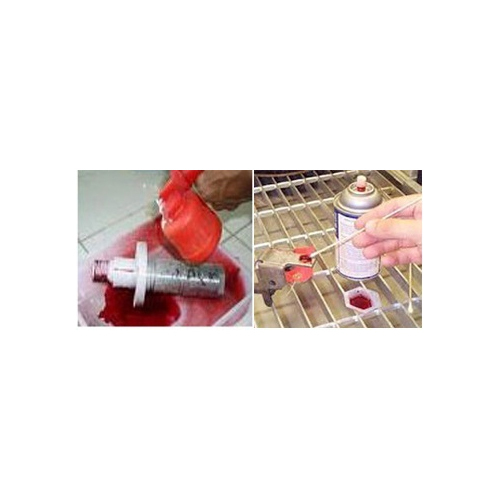
Tell us about your requirement

Price:
Quantity
Select Unit
- 50
- 100
- 200
- 250
- 500
- 1000+
Additional detail
Mobile number
Email

More Products in NDT And Consultancy Services Category

 Send Inquiry
Our Products
- Third Party Inspection Services
- Welding Consultancy Services
- NDT And Consultancy Services
- Destructive Testing Services
- NDT Training Institute
- Calibration Services
- Metallography Testing Service
- Impact Testing Services
- Non Distructive Testing
- Destructive Test Service
- Industrial Manpower Services
- Magnetic Particle Testing
- Borescope Inspection Services
- Magnetic Partical Testing Services
- Dye Penetration Testing Services
- Radiography Testing Service
- Digital Hardness Testing Services
- Hardness Testing Services
- Measurement Services
- Tensile Strength Testing Service
- Helium Leak Testing Service
- Bend Testing Services
- Manpower Supply Services
- Testing Service
- Material Testing Service
- Inspection Service
- Welding Consultancy Service
- Consultancy Service
- Chemical Analysis
- Ndt Testing
- Ndt Training Institute
- Ultrasonic Testing Services
- Testing And Calibration Service


Skillen H Block, Plot No. H-14, Near Morwadi Court, Pimpri,Pune - 411018, Maharashtra, India

Mr Vaibhav Bhosale
(Director)
Mobile :08071931840
 Send Inquiry
Developed and Managed by Infocom Network Private Limited.


 English
 Spanish
 French
 German
 Italian
 Chinese (Simplified)
 Japanese
 Korean
 Arabic
 Portuguese